

You just pulled your kid out of school (or you’re this close to doing it), and now you’re wondering:
“Okay, but what do I actually do now?”
Should you buy a curriculum? Print a schedule? Google “homeschool for beginners” and spiral into panic?
Hold on.
Take a breath.
You don’t need a workbook, or a curriculum right now.
You likely need a reset.
It’s called deschooling, and if you’ve never heard of it before, that’s okay. I’ve got you.
Let’s break it down mama-style:
Who, what, when, where, why, and how. (Because yes, we’re still going to learn something today—but without the test.)
WHAT is Deschooling?

Deschooling is the in-between space. The decompression zone. The part where you and your child take a break from all things school so you can figure out how to actually enjoy learning again.
It’s not “doing nothing.”
It’s doing something so much more important:
- Resting
- Reconnecting
- Relearning how to be curious humans again
- Identifying and understanding learning styles
- Becoming familiar with strengths and areas of opportunities

WHO Needs to Deschool?
You do. Your kid does.
Honestly? Most of us do.
If your child has been in school long enough to:
- Dread Monday mornings
- Think they’re “bad at” learning
- Only feel smart when they get an A
Then yep, deschooling is for them.
And if you’ve ever felt the need to make a color-coded schedule so you don’t “fall behind” three days into homeschooling?
Oh, friend. Deschooling is definitely for you, too.
WHEN Do You Deschool?
Right after you leave traditional school.
Before the curriculum.
Before the Pinterest schedule.
Before the panic-buying of math workbooks.
There’s no “perfect” time—but there is a right time:
When you feel like rushing in just to prove you’re not falling behind.
Pause instead.
The general rule of thumb?
📅 One month of deschooling for every year your child was in school.
But honestly? You can stretch or shorten it based on your family’s needs. There’s no magic number. You’ll know when it’s time to move forward because your kid will start asking questions again and doesn’t feel the need to perform. The natural curiosity will return—and that’s your green light.

WHERE Does Deschooling Happen?
Anywhere but a desk with a workbook.
Deschooling lives:
- At the kitchen table with muffins and a read-aloud.
- On the couch watching documentaries and snuggling.
- In the backyard digging up bugs.
- At the library, museum, or coffee shop.
It happens during conversations, quiet moments, and asking, “What are you curious about today?”

WHY Deschool?
Because traditional school teaches kids how to survive a system, not how to love learning.
And if we bring that mindset into homeschool?
Because school teaches kids how to follow rules.
But homeschooling? That’s about raising thinkers.
If you skip deschooling, chances are you’ll just recreate school at home—and that’s usually where the tears, power struggles, and burnout creep in.
Deschooling helps you:
- Get clear on what kind of homeschool actually works for your family.
- Repair your relationship with learning
- Rebuild your child’s confidence
- Let go of school guilt and unrealistic pressure

HOW Do You Deschool?
Here’s what it looks like in real life:
Give yourself grace. You’ll want to panic. You’ll want to “do something.” That’s normal. Take a breath. You’re still doing something—it just doesn’t look like school.
Say it out loud. Tell your child: “We’re not doing “school” right now. We’re taking time to rest, reconnect, and rediscover what learning really is and what it means to us.”
Ditch the worksheets (for now). Seriously. Hide them. Lock them up. Burn them (optional). That was 100% a joke, by the way. Worksheets can definitely be useful.
Do life together. Cook, clean, walk, talk, read, build, watch, wonder.
Keep a simple journal. Write down what you notice: new interests, unexpected questions, little wins. Start a “Wonder Wall” and every time someone asks a fantastic question that no one knows the answer to: write it on the wall and research the questions 1-2 a week.
Read good books. Picture books. Audiobooks. Graphic novels. Don’t overthink it.
Notice things: What makes your kid light up? What do they gravitate toward? Jot it down. That’s your roadmap.
Ask this a lot: “What do you want to learn more about?”
Trust the pause. You’ll be tempted to do something that looks like school. Resist. Deschooling is doing something.
Ask open-ended questions. “What was your favorite thing you did today?” “What do you wish you could learn more about?”

Final Thoughts for the Mama in the Middle
If you’re standing at the edge of homeschooling feeling overwhelmed, scared, and unsure—deschooling is your lifeline.
You don’t need to “get it all right.”
You don’t need a perfect curriculum.
You just need to start with rest, curiosity, and connection.
Deschooling is the reset button that says:
“You don’t have to do it their way anymore.”
And trust me—you and your child are worth the time it takes to unlearn, heal, and begin again.
Need Help Easing In?
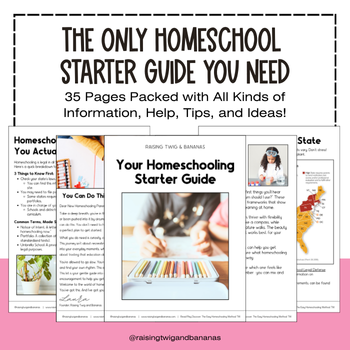
Download my free Homeschool Starter Guide—packed with encouragement, realistic tips, and simple deschooling information to guide you through this homeschool season.
Be sure to sign up for my newsletter, so we can learn and grow together and be the best homeschool moms our kids deserve!
You’ve got this,