Every summer, parents panic a little.
We start wondering:
Should I buy workbooks? How much should my kids be reading? Are they going to forget everything? Do I need to keep them “academically engaged”? How much screen time is too much?
And listen… I get it. I’m a former teacher and a homeschool mom. I’m viscerally aware of the fear of kids “falling behind.”
But I also think summer quietly reveals something really important: A lot of kids are deeply exhausted from being managed all year long.
And honestly?
A lot of parents are tired of doing all of the managing as well.
Because somewhere along the way, many of us started believing that learning only counts when it’s being managed, when it’s measurable, structured, assigned, supervised, or attached to a curriculum.
But then summer comes around and something interesting happens (when kids are off screens of course).
Kids suddenly start:
- building things,
- cooking,
- baking,
- exploring,
- playing and creating games,
- filming videos,
- asking random questions,
- making businesses,
- researching weird topics,
- solving problems,
- negotiating with siblings,
- planning things,
- earning money,
- experimenting,
- getting bored,
- becoming resourceful.
In other words:
they start acting like actual humans who have goals, ideas, and time to explore.
And that’s why I think summer is the PERFECT time to experiment with unschooling.
Not necessarily forever, and not even perfectly. Just enough to experiment and start questioning some things.
First, Let’s Clear Something Up
A lot of people think unschooling means, “Kids just do whatever they want all day.”
And honestly, I understand why people think that because social media has done a terrible job explaining it.
However, real unschooling — or even unschooling-inspired learning — is much deeper than that.
It’s based on the idea that humans naturally learn through:
- curiosity,
- real-life experiences,
- interests,
- relationships,
- experimentation,
- play,
- responsibility,
- conversation,
- observation,
- and meaningful work.
That doesn’t mean parents disappear.
It means we shift from:
controlling every learning moment
to:
noticing, supporting, exposing, guiding, collaborating, and trusting more.
And summer naturally creates time and space for that shift.
Summer Is Already Different
That’s what makes it such a good testing ground.
The rigid schedule loosens up a bit.
The pressure eases up.
The pace changes.
You’re already outside the normal school rhythm anyway.
So instead of immediately recreating school at home with:
- worksheets,
- mandatory desk time,
- strict academic schedules,
- and constant oversight…
what if you used summer to OBSERVE your child instead?
- What are they naturally drawn toward?
- What problems do they try to solve?
- What frustrates them?
- What lights them up?
- What skills are they lacking?
- What do they avoid because it’s hard?
- What do they binge-learn without being asked?
- That information matters.
- Honestly, I think parents learn more about their kids during unstructured time than almost any other time. It’s a lot like viewing an animal in their natural habitat ☺️.
Some of the Most Valuable Learning Looks Invisible
This is the part that changed me the most after leaving the classroom.
Because once you step outside traditional school thinking, you start realizing how much learning we overlook.
A child:
- figuring out how to sell snacks at a market, or in the neighborhood
- editing videos
- helping cook dinner or breakfast
- budgeting birthday money
- learning customer service
- navigating boredom
- organizing a room
- cleaning at home
- solving sibling conflicts amicably
- researching dirt bikes for three hours
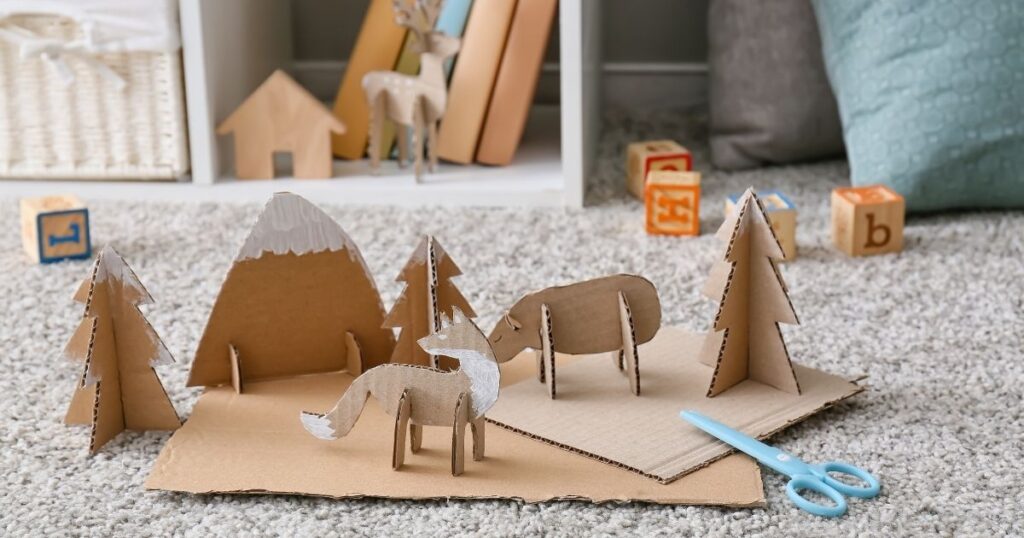
- building cardboard inventions
- writing and mailing thank you letters
- filming a documentary about chips…
is learning A LOT. Maybe not in neat little subject boxes, but real life rarely, if ever, works in neat little subject boxes anyway.
Real life blends:
- communication,
- problem solving,
- creativity,
- emotional regulation,
- math,
- reading,
- adaptability,
- resilience,
- and initiative all at once.
That’s why I think summer can become something so much more powerful than: “trying not to lose academic progress.” It can become a season of capability.
Honestly? A Lot of Kids Need More Real Life
I think many kids today are over-assisted, under-capable, and have learned some helplessness.
Not because parents are failing.
But because modern parenting culture has made us afraid to let kids struggle, figure things out, get bored, solve problems, take ownership, or do hard things independently.
So we step in constantly.
We remind.
We monitor.
We rescue.
We manage.
We supervise every second.
And then we wonder why kids struggle with:
- motivation,
- initiative,
- resilience,
- confidence,
- responsibility,
- or independence.
But capability is built through practice.
Not lectures, or not motivational speeches.
But, through opportunities and tons of practice.
Summer gives us room to allow them to practice.
This is actually one of the reasons I created my Summer Life Skills Bootcamp.
Not because I think kids need to spend all summer “being productive.”
But because I think real confidence comes from:
being able to DO things.
Kids feel powerful when they can:
- cook,
- clean,
- communicate,
- solve problems,
- earn money,
- help,
- contribute,
- and function more independently in the world.
That kind of learning matters deeply.
You Don’t Have to Become “Fully Unschooling”
I think this is where parents get stuck.
They think:
“If I try this, I have to completely abandon structure forever.”
No.
You can simply experiment.
You can:
- loosen your grip a little,
- follow interests more,
- prioritize projects,
- spend more time outside,
- let kids help with real life,
- encourage entrepreneurship,
- normalize boredom,
- read more together,
- focus on life skills,
- and stop treating learning like it only happens at a desk.
That alone can change a LOT.
And honestly?
Some of the best learning moments in our home have happened when I stopped trying so hard to force them.
Final Thought
I don’t think summer needs to become “school at home.”
And I also don’t think kids need to spend three months mindlessly consuming content either.
I think there’s a middle ground.
A beautiful one, actually.
A version of summer where kids:
- explore,
- create,
- build,
- help,
- wonder,
- fail,
- try again,
- make money,
- solve problems,
- follow interests,
- develop real skills,
- and slowly become more capable humans.
And maybe that kind of learning deserves a little more respect than we’ve been taught to give it.
How do you feel about giving unschooling a test run this summer?