
🪴 Allow Me to Keep it Real
There’s nothing quite like starting your homeschool day at 9:00 am with a solid plan… and then completely ignoring it by 9:07am. (Just me?)
For years, I chased someone else’s “perfect” homeschool schedule—the color-coded Pinterest ones that look like a teacher with a laminator and unlimited childcare designed them. But none of it worked for my real life. Especially not for my 9-year-old, who has ADHD and a serious love-hate relationship with pencils.
What finally did work? A hands-on homeschool daily rhythm that’s flexible, book-rich, hands-on, and centered around how we actually live and learn.
And spoiler: it’s built around STREAM learning (that’s Science, Technology, Reading, Engineering, Art, and Math), with plenty of room for books, curiosity, and building things out of cardboard. No worksheets in sight.
Let me show you what it looks like.

☀️ Our Daily STREAM Homeschool Rhythm
This is what our homeschool day looks like most days—when life doesn’t throw us a curveball like a forgotten dentist appointment or a Lego building crisis.
9:00–9:30am — Breakfast + Read-Aloud
We start slow. I read while my kid eats, wiggles, builds a spaceship out of toast crust, or just listens. The book doesn’t have to be on theme—sometimes it’s just one we love. But often, it connects to our weekly STREAM project.
Zero expectations. Maximum coziness.
9:30–10:00am — Movement + Curiosity Spark
Before the learning begins, we move. A little obstacle course (to help with his proprioception sensory needs). A few jumping jacks and pushups. A bike ride around the neighborhood.
Then we sit down for a tiny teaser—maybe a short video, a wild “what if?” question, or a weird science fact—to plant the seed for our STREAM adventure.

10:00–11:30am — Main STREAM Project Block
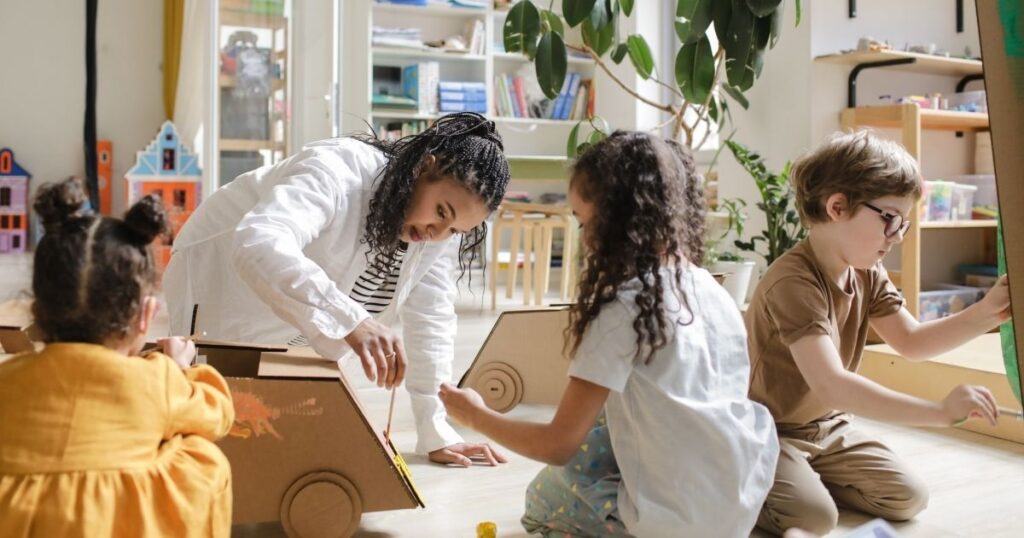
This is the heart of our day. We build. Create. Mix. Measure. Invent.
It’s messy. It’s loud. It’s totally hands-on.
Sometimes it’s a science experiment. Other times it’s engineering a marble run or creating a stop-motion video. Whatever it is, it’s something my kid wants to do—and that makes all the difference.
11:30–12:00pm — Notebooking & Vocabulary
I know, I know… writing. But stay with me.
We keep it short and meaningful:
👉 Label a diagram of what we built.
👉 Sketch vocab words from our project.
👉 Write three “I noticed” sentences.
👉 Or record a voice note and transcribe part of it.
Notebooking works because it’s fun and personal. No worksheets. No busywork. Just capturing what we’ve actually learned.
12:00–12:30pm — Real-Life Math
Okay, so here’s the deal: we’ve done Singapore Math. We’ve even liked it. I think it’s a solid, well-designed program—especially if you have a child who loves structure, patterns, and building strong mental math skills.
But here’s the truth: we don’t follow a math curriculum anymore.
Not because math isn’t important, but because I’ve realized most of what’s taught past a certain grade level just… doesn’t often show up in real life. Like, when was the last time someone asked you to solve for X using the quadratic formula at the store?
What is essential?
Understanding numbers.
Thinking logically.
Problem-solving in real-life situations.
So that’s the kind of math we do now.
Here’s what it looks like for us:

- Budgeting for a grocery list (he has $20 to spend—what can he buy?)
- Measuring and fractions while baking (aka “kitchen chemistry”)
- Estimating time and distance (How long will it take to scooter around the block 3 times?)
- Building and measuring during STREAM projects (How tall is the tower? How wide is the bridge?)
- Board games and math card games (Sum Swamp, Uno, Math War, Yahtzee)
- Skip counting basketball shots or racing to solve math facts outdoors
We call it Math in the Real World.
It’s sneaky, sticky, and way more fun than a worksheet. And most importantly—he’s actually using it.
12:30–1:00pm — Lunch + Free Play
We eat. We chill. Maybe we listen to an audiobook. Maybe not. No expectations here, just giving our brains a chance to rest.
1:00–1:20pm — Independent Reading or Audiobook
This is quiet time… sort of. He might lie on the floor with a graphic novel. He might listen to a read-aloud while building with LEGOs. As long as it’s book-ish and calm-ish, I call it a win.
1:20–2:20pm — Project or Passion Time
Some days, he wants to extend our STREAM project. Other days, it’s something totally different—like designing a video game level, writing a comic, or constructing a cardboard claw machine.
This is where the magic of interest-led learning shows up. And I try really hard not to interrupt it with a checklist.
2:20–2:45pm — Creative Writing or Journaling
Now that the ideas have had time to percolate, we return to writing—his way.
He might:
✏️ Write a silly story using STREAM vocab
📝 Add to his “Invention Journal”
📓 Create a “how to” guide based on his project
🎨 Draw a comic strip with speech bubbles
It’s creative, short, and usually fun. And if it’s not? We pivot. Because that’s the beauty of homeschool.

2:45–3:30pm — Life Skills + Outdoor Time
We wind down with real life. Cooking. Gardening. Sweeping. (Okay, fine—sometimes sweeping.)
Or we head outside and let nature do the rest.
Why This Rhythm Works for Us
It’s flexible, not rigid
It centers real learning and curiosity
It builds in movement and downtime
It gently integrates writing (without killing the vibe)
And most importantly—it actually fits our life
Want the Printable Version?
I turned our daily rhythm into a simple, easy-to-follow printable.
No clutter. No fluff. Just something you can stick on the fridge and actually use.
🎉 Click here to download it (totally free!)
If your homeschool day feels a little chaotic, or if you’d like to try something new in the upcoming homeschool year, I see you. Truly.
It’s not about doing more—it’s about finding a rhythm that works for your family.
And maybe, just maybe… that means less pressure, fewer worksheets, and way more wonder.
Be sure to sign up for my newsletter, so we can learn and grow together and be the best homeschool moms our kids deserve!
You’ve got this,